

New York, United States, December 2nd, 2025, Chainwire
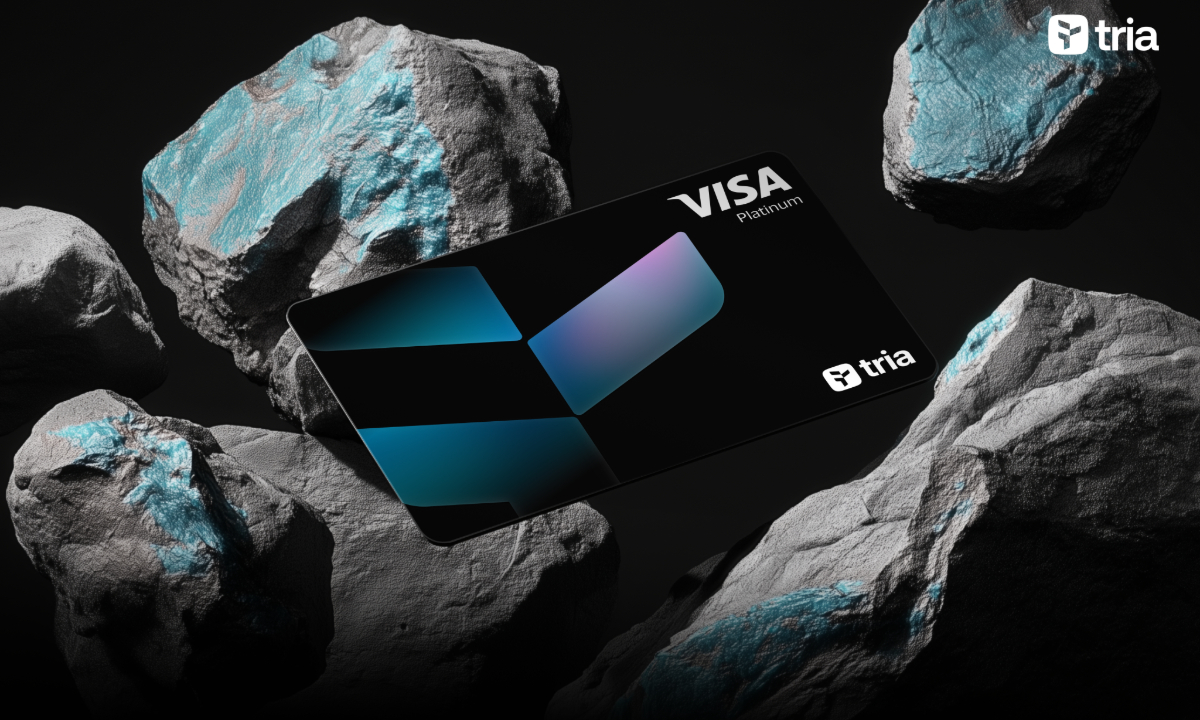
Tria, the leading non-custodial global neobank, today announced that its payment card now supports top-ups directly from users’ self-custodied Bitcoin holdings- a first-of-its-kind milestone. The update allows consumers to fund their card from their own Bitcoin wallets and spend anywhere Visa or Mastercard is accepted- without transferring assets to an exchange, a lending account, or any custodial intermediary. The feature is designed to give Bitcoin holders a way to participate in global payments without altering how they store or secure their assets.
Responding to Global Currency Instability and Shifting Consumer Behavior
The launch coincides with increased global interest in alternative stores of value. In regions across Latin America, Southeast Asia, Africa, and even developed markets like Japan, extended periods of currency depreciation have led consumers to seek assets that preserve purchasing power. At the same time, several governments are advancing national stablecoin initiatives—such as JPYC in Japan, EURS in the Eurozone, and KRW-, IDR-, and PHP-denominated stablecoins in Asia—making multi-currency, on-chain financial infrastructure increasingly relevant.
Tria is positioned at the center of this shift by building financial tools that enable users to hold long-term assets such as Bitcoin or USD-denominated stablecoins, while still transacting in local currencies without relying on traditional FX rails or domestic banking systems.
How Self-Custodied Bitcoin Spending Works on Tria
Most payment cards backed by Bitcoin today rely on a custodial step: users deposit their BTC with a centralized service, which then converts or collateralizes the funds. Tria’s design avoids this entirely. With Tria:
- Users keep their Bitcoin in their preferred self-custody setup (including hardware wallets, mobile wallets, multisig, or other non-custodial configurations).
- When topping up the Tria card, the BTC is signed and sent directly from the user’s wallet through a non-custodial smart contract system.
- Tria does not take possession of the Bitcoin at any stage; the process does not create a custodial account or expose funds to platform-held balances.
- The resulting card balance becomes spendable within standard payment networks without changing the underlying custody of the user’s BTC beyond the amount the user has explicitly moved.
This architecture is intended to preserve control, transparency, and reversibility- core requirements for emerging AI-driven financial automation and on-chain governance systems.
A Non-Custodial Approach to Global Financial Access
Tria’s broader product vision is to provide global financial tools without routing user funds through bank-managed choke points or custodial intermediaries. This includes the ability to store value, hedge FX exposure, earn yield, access on-chain liquidity, and spend internationally.
Tria’s infrastructure already supports more than 1,000 of the most liquid digital assets across Ethereum, Base, Polygon, BNB Chain, Arbitrum, and Optimism—allowing users with diverse portfolios to operate under the same self-custodied, top-up-based spending model that Bitcoin now joins.
“People want financial tools that match how the world works today, not how legacy systems work,” said Vijit Katta, Co-Founder and CEO of Tria. “Across many regions, consumers face real currency erosion, capital restrictions, and unpredictable banking access. At the same time, Bitcoin and stablecoins have become core savings instruments. Our goal is to let people hold these assets in the way they trust, while still giving them a card that functions anywhere. Self-custody shouldn’t prevent participation in global commerce—and now it doesn’t.”
Getting Started
Existing Tria users can activate Bitcoin top-ups inside the app. New users can download the Tria application, complete onboarding, connect their self-custodial wallets, and begin using Bitcoin to fund their Tria card while maintaining full control over their assets.
About Tria
Tria is a self-custodial neobank that unifies spending, trading, and earning across all chains — without bridges, gas, or custodians. Built for both humans and AI, Tria makes money programmable, enabling anyone or any agent to transact natively on-chain. Powered by its interoperability layer, BestPath AVS, Tria abstracts away the complexity of crypto to deliver instant, global, and autonomous finance.
Contact
Jon Lindsay Phillips
PhillComm Global
Tria@phillcomm.global